PowerStat
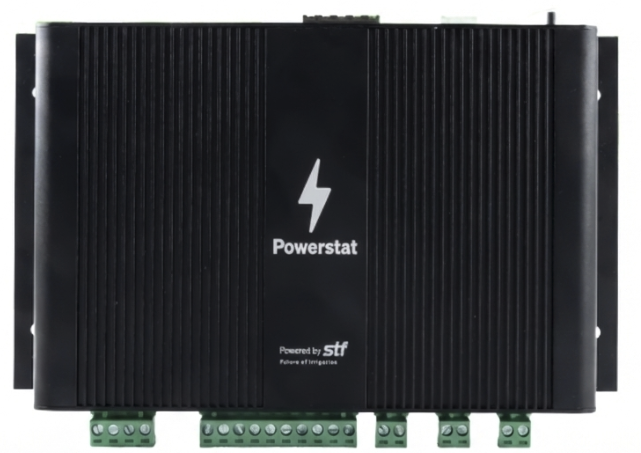
What is PowerStat?
PowerStat is an end-to-end monitoring and control platform built to monitor, manage, and record the energy parameters of high-power motor–pump systems and, optionally, field-specific process/water pressure data.
PowerStat’s primary focus is not solely “agricultural irrigation.” The same architecture can be used to make visible energy quality, failure trends, unplanned downtime risk, and operating costs in motor–pump–centric operations such as:
- Agricultural irrigation pumps (motor pumping, deep wells, pressurized irrigation lines)
- Potable water / transmission / tank filling pumps (municipality/site/facility infrastructures)
- Industrial energy monitoring and motor health tracking (production facilities, auxiliary operations, compressor/pump lines)
The device is designed to be integrated into existing motor control panels in the field. Installation is carried out without altering panel infrastructure and in harmony with the familiar electrician workflow. Through energy measurement terminals, status/fault monitoring inputs, and start–stop control outputs, a clear and repeatable connection structure is established with the panel.
On the optional sensor layer, data can be acquired from pressure, flow, level, or process sensors depending on the application. Thus, PowerStat monitors not only the electrical state but also the work output of the motor–pump system (e.g., pressure behavior).
PowerStat is not a standalone device. It adopts a holistic system approach that considers hardware, embedded software, communication, backend services, and the mobile application together.
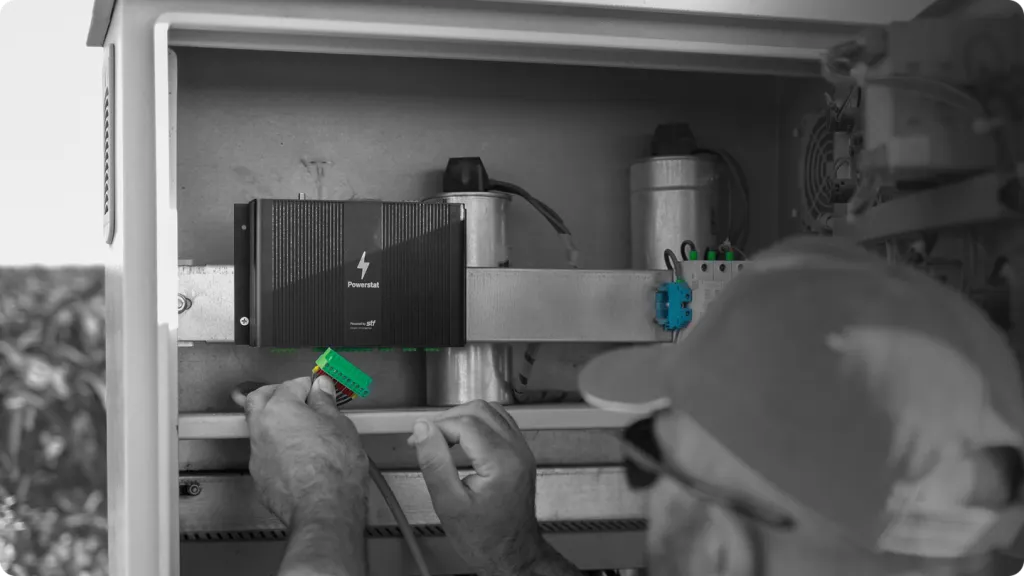
The primary goal of installation is to support the existing protection–control chain inside the panel and to provide measurement + recording + remote visibility without changing field infrastructure. PowerStat can be quickly mounted by electricians and technical teams; connection diagrams and mounting principles are detailed technically on hardware pages.
The system operates with dynamic data transmission depending on field conditions. It produces telemetry at low frequency when the motor is not engaged and at higher frequency when it is; these periods can be parametrically adjusted per device/installation according to field needs.
However, PowerStat does not rely on periodic data alone. In sudden state changes such as phase loss, voltage fluctuation, current imbalance, pressure drop, or defined limit violations, it sends instant data and alerts without waiting for the interval. This ensures the user is informed of critical developments without delay.
In agricultural fields, energy and irrigation are often evaluated with a purely outcome-oriented view; the pump either runs or stops, irrigation either happens or not. Yet, behind these processes lie critical parameters that directly affect motor health, equipment lifetime, and product yield. Uncontrolled energy usage leads to motor failures and unplanned downtime, while uncontrolled irrigation pressure results in line damage, irregular irrigation, and significant yield losses.
PowerStat is not a passive monitoring product that merely collects telemetry. On the device, there is a local decision layer that can operate in the field even if connectivity is temporarily interrupted:
(1) Deterministic Protection (Safety Logic): In situations such as phase loss, dangerous voltage levels, overcurrent, or critical process deviations (e.g., pressure), predefined and auditable rules execute. The goal is to trigger the safe action that protects equipment and infrastructure without delay.
(2) Field-Specific Anomaly Detection (Edge ML / Profile Learning): Energy and process behavior are monitored over time to establish a “normal operating profile.” Thus, in cases where the same threshold values mean different things in different fields, alerts are contextualized; unnecessary alerts decrease while real risks are captured earlier.
Together, these two layers aim not only to generate event-based notifications but also to take local actions (e.g., safeguarding the pump) in line with predefined scenarios.
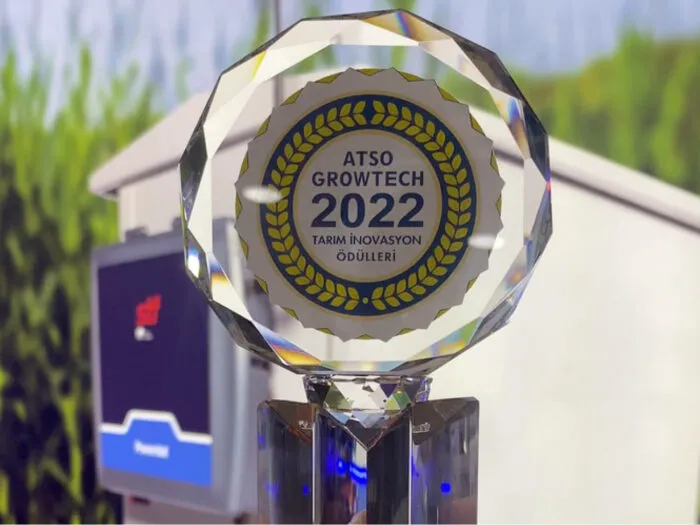
This product family is built upon field experience and R&D expertise recognized with the ATSO – Growtech 2022 Agriculture Innovation Award. This award is an important reference indicating that PowerStat is evaluated not only technically but also as a practical and scalable solution that addresses real problems in the field.
Field Problems and PowerStat’s Solution Approach
Most of the issues encountered in motor–pump systems are not sudden failures but chronic problems that continue unnoticed for long periods and lead to significant costs over time. These problems often remain invisible until the system fully stops; the operator, electrician, or manager can only intervene once the outcome has occurred.
PowerStat is designed to surface these invisible problems early, record them, and make them manageable. The system considers energy and irrigation behavior in the field holistically and monitors not only the outcomes but also the processes that lead to those outcomes.
Chronic Problems on the Energy Side
Motor–pump and industrial power infrastructures often operate under fluctuating and non-standard conditions. Phase losses, unbalanced loads, low or high voltage levels, and instantaneous current changes create constant stress on motors. Because such problems are mostly short-lived, classical systems do not detect them; meters only show total consumption and provide no information about motor operating quality.
This leads to shorter lifetimes for motors and panels, unplanned downtime, and high maintenance costs. By continuously monitoring energy parameters, PowerStat evaluates these chronic issues not as isolated incidents but through behaviors over time. Thus, risky situations can be detected before a failure occurs and the system can be safeguarded.
Another critical issue frequently encountered on the energy side is reactive energy costs/penalties. In many irrigation sites, compensation systems either do not exist or become inoperative over time. While the pump continues to run, reactive consumption increases unnoticed, causing users to face high penalties. In most cases, the problem is not noticed until the penalty appears on the bill.
By monitoring active and reactive energy behavior together, PowerStat detects such situations at an early stage. In scenarios where reactive limits begin to be exceeded, both the user and the on-site electrician are informed instantly. Thus, the compensation system can be intervened in time and brought online, preventing reactive penalties from occurring. These field experiences clearly show that PowerStat protects not only equipment but also operating costs directly.
Invisible Problems on the Process Side (Pressure / Flow / Level)
In field operations, whether the pump runs is often seen as the sole “success criterion.” However, for efficient and safe operation, process output as well as the motor’s electrical health must be monitored.
PowerStat can continuously monitor process signals such as pressure/flow/level depending on the application. Sudden drops or unusual changes in these values can be early indicators of problems such as line break/leakage, clogged filters, valve faults, or pump performance loss. If these situations are not physically tracked, they remain invisible and output quality deteriorates while the operation appears to be “running.”
This approach transforms monitoring from being merely for reporting into an operational layer that captures critical situations event-wise and provides the operator with rapid action capabilities.
The edge ML + safety logic layer on PowerStat’s device monitors not only drops in process values but also sudden rises, evaluating them as well. In addition to decreases seen in situations like line break/leakage, clogging, or equipment-induced deviations, the system also captures event-wise scenarios such as user error closing the wrong valve, sudden line lock-up, or closing an irrigation line at the far end.
These situations can create significant mechanical stress on the irrigation line, connection elements, and the pump. Using learned normal operating behaviors as a reference, PowerStat distinguishes these anomalies and, in line with predefined safety scenarios, can trigger the necessary alerts and protection actions. Thus, the irrigation infrastructure is actively protected not only against water loss but also against damage caused by internal line pressure.
Why Hasn’t It Been Solved Until Now?
One fundamental reason why these problems have not been solved for years is that many “smart agriculture” solutions on the market have been developed with overseas farmer profiles and field conditions as references. These systems are often designed for agricultural fields with strong infrastructure, high grid quality, and established standards. However, agricultural irrigation sites in Turkey have much different and more challenging conditions in terms of electrical infrastructure, field scale, operating mode, and user habits.
The problems faced by Turkish farmers are not only technological but also operational and practical. Structures that work with on-site electricians, regional grid fluctuations, irrigation performed at night, and fields that cannot be constantly supervised require a different approach. PowerStat is developed with this difference at its core. As a completely domestic product, it has been shaped directly together with farmers and technical teams in the field; real problems have been listened to and solutions have been produced to respond one-to-one to problems experienced in the field.
Thanks to this approach, instead of theoretically “smart” solutions with no counterpart in the field, PowerStat offers an applicable and sustainable system that adapts to the realities of agricultural irrigation in Turkey.
Lack of Reporting and Decision-Making
One of the most fundamental deficiencies encountered in agricultural irrigation sites is not knowing how long and in total irrigation has been carried out. Most farmers cannot clearly see how many hours they irrigated in a season or how this reflects on total energy and water costs. This uncertainty makes it difficult to calculate the real cost and prevents the creation of a balanced irrigation plan suitable for the product’s needs.
Furthermore, many problems experienced in the field are not one-off failures but chronic issues that recur over time and grow. However, because there are no retrospective records, these problems go unnoticed; it is not known how often certain failures occur or in which periods they recur. This not only causes the current system to operate inefficiently but also leads to unhealthy investment decisions. By recording energy and irrigation data regularly and in a comparable manner, PowerStat makes possible cost analysis, detection of failure trends, and data-driven investment planning for the future.
Technical Architecture
What makes PowerStat a “working system” in the field is not a single hardware board, but the combined design of hardware, embedded software, communication layer, backend services, mobile application, and management panel. This section summarizes at a high level how these layers are connected and which design principles they follow.
PowerStat’s conceptual foundation and product vision are built upon approximately 15 years of field observation and experience. The product’s problem definition, solution approach, design decisions, and productization process have been envisioned by Mehmet Günce Akkoyun, and the end-to-end development and implementation steps have been carried out under this leadership.
At the same time, PowerStat has been planned as a team effort from the beginning so that it can grow sustainably. Production across layers such as hardware, firmware, backend services, mobile application, and management panel has been conducted in-house under a single vision, keeping dependence on external resources to a minimum in critical technology layers.
Thanks to this approach, PowerStat has turned into a scalable structure that can quickly iterate based on field feedback, manage maintenance and security processes internally, and scale by incorporating new teams during growth.
Field Conditions and Design Principles
Motor–pump sites (agricultural irrigation, potable water, industrial auxiliary operations) are not stable environments like a “data center.” The grid fluctuates, GSM coverage varies regionally, there is not constantly someone at the device, and issues often occur at night. Therefore, PowerStat should not be thought of as a product that only collects data and sends it to the cloud. The main principle of the architectural design is to take action without delay in critical events in the field and to keep the system running safely even if data transmission temporarily falters. For this reason, dynamic data transmission, event-based alerts, and on-device protection scenarios are central to the architecture.
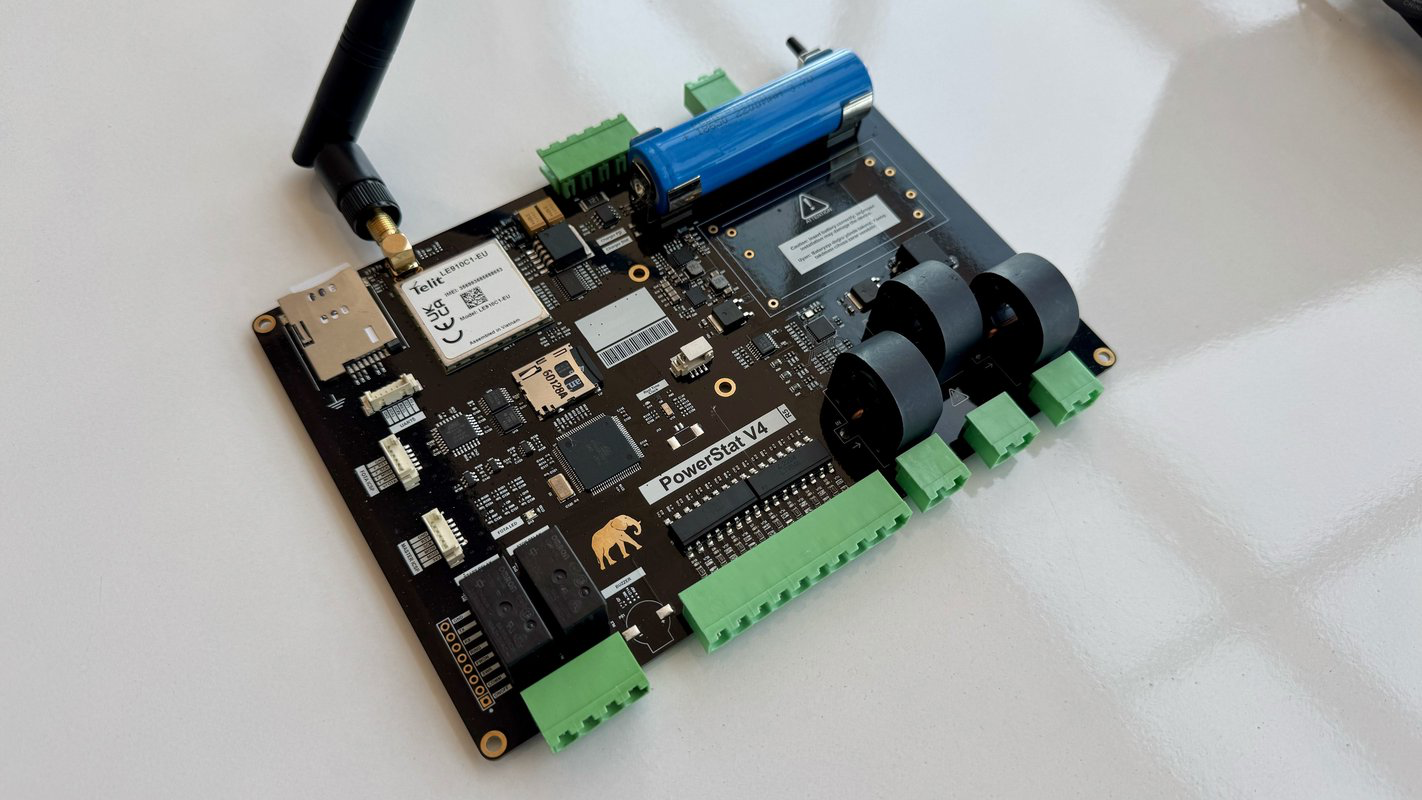
At a block level, PowerStat is constructed as a modular structure that combines energy and irrigation behavior in a single device. On the energy side, the power analyzer layer reliably captures voltage and current measurements and produces the fundamental data required to assess motor operating quality. To monitor panel-side states, field signals such as phases, protection relays, contactors, etc. are read through an input (fault detection) layer; thus problems can be tracked not only from outcomes but also by their causes on the panel. On the intervention side, the output (start–stop control) layer enables actions such as engaging the pump or stopping it by safeguarding, in line with predefined safety scenarios, to be carried out in the field.
Above these measurement and control blocks sits the processor layer, which collects all data, calibrates it, and runs decision mechanisms in the field. On the communication side, the GSM layer and antenna infrastructure are designed to target long-term and stable connectivity in rural sites. On the process side, measurements are taken through a sensor layer suitable for the field (e.g., RS485 pressure/flow/level); it is planned to move these measurements to a wireless architecture in the future.
In the power supply architecture, PowerStat is designed to operate via an external adapter. This choice protects the power architecture inside the panel from unnecessary complexity and provides a practical advantage for field operations: In simple supply problems such as adapter failure, a quick part replacement can solve the issue in most scenarios, significantly reducing the need for the service team to visit the field. The primary goal at the hardware layer is not to make “as many measurements as possible,” but to collect measurements that support critical decisions in the field reliably, repeatably, and in a manner suitable for panel installation.
What Can the Energy Analyzer Measure?
The energy analyzer inside PowerStat has measurement sets that can vary by use case.
| Parameter | Short description |
|---|---|
| Instantaneous Voltage | Instantaneous voltage value for all phases (phase-neutral). |
| RMS Voltage | RMS voltage for all phases. |
| RMS Voltage average | RMS voltage average across all phases. |
| Fundamental Voltage | Fundamental frequency (1st harmonic) voltage component for all phases. |
| Harmonic Voltage | Aggregate effect of harmonic components on voltage for all phases. |
| Instantaneous Current | Instantaneous current value for all phases. |
| Peak Current | Peak current value for all phases. |
| RMS Current | RMS current for all phases. |
| RMS Current average | RMS current average across all phases. |
| Fundamental Current | Fundamental frequency (1st harmonic) current component for all phases. |
| Harmonic Current | Aggregate effect of harmonics on current for all phases. |
| Fundamental Reactive Power | Reactive power at the fundamental frequency (Q1) for all phases. |
| Harmonic Reactive Power | Reactive power arising from harmonics (Qh) for all phases. |
| Active Power | Active power (P) for all phases. |
| Reactive Power | Reactive power (Q) for all phases. |
| Apparent Power | Apparent power (S) for all phases. |
| Active Power average | Average active power across all phases. |
| Reactive Power average | Average reactive power across all phases. |
| Apparent Power average | Average apparent power across all phases. |
| Fundamental Power | Power component at the fundamental frequency (P1/S1) for all phases. |
| Harmonic Power | Power arising from harmonic components (Ph) for all phases. |
| Fundamental Volt Amperes | Apparent power at the fundamental frequency (S1, VA) for all phases. |
| Power Factor | Overall power factor (PF) for all phases. |
| Received Active Energy | Total imported active energy from the grid. |
| Delivered Active Energy | Total exported active energy to the grid. |
| Reactive Energy Leading | Total capacitive (leading) reactive energy for all phases. |
| Reactive Energy Lagging | Total inductive (lagging) reactive energy for all phases. |
| Frequency | Grid frequency (Hz). |
Embedded Software (Firmware) Architecture
PowerStat’s firmware layer is the core that executes measurement and control operations in real time in the field. This layer reads, calibrates, and interprets data from sensors and produces data packets according to defined periods. Lower-frequency data production when the pump is not engaged and higher-frequency when it is, plus instant notification logic for events like limit violations, are executed at the firmware level.
The most critical role of the firmware is to safely implement local protection (safety logic) scenarios running on the device and the field-specific edge ML decision layer. When a sudden pressure drop/rise or dangerous energy behavior is detected, the system triggers actions that can safeguard the pump without waiting for a central command. This approach turns PowerStat into a system that not only “monitors” but also actively “protects” in the field.
In PowerStat, the firmware lifecycle is designed with a GSM-based FOTA (Firmware Over-The-Air) architecture so that devices in the field can be managed sustainably over the long term. With this structure, new software versions can be delivered remotely to devices; bug fixes, improvements, and new scenarios can be deployed without physical intervention in the field.
The biggest advantage of the FOTA approach in the field is that it largely eliminates processes that generate time and cost such as “go to the field – connect to the device – update” in the event of a software-related problem. With a centrally planned update, the update process can be initiated for certain device groups or the entire device fleet in a single operation; devices receive the update under suitable conditions and transition to the new version in a controlled manner. Thus, PowerStat becomes not merely a product that operates in the field, but a living system that continually learns from the field and can be improved remotely, making it scalable.
Backend Architecture
PowerStat’s backend is a scalable service layer established to securely receive, validate, process, store, and report data from the field. This infrastructure runs on virtual machines located in a local data center in Turkey, with KVKK compliance in mind (a data center located within Turkey). Thus, field data from devices remains within the country, making data residency clear and manageable for enterprise customers.
The backend architecture is designed with a microservices approach rather than a single monolithic application. In this way, the high-traffic data flow from the field can be split and processed across different services; when load increases, relevant services can be scaled, and maintenance/updates can be carried out without affecting the entire system. In the architectural flow, packets from devices reach the system in a controlled manner via a private APN line; after validation and schema checks at the ingress layer, they are distributed among services with queue (Kafka) logic for high-performance processing.
At the decision-making center of the system, the Rule Service continuously scans streaming data and, when threshold violations, unusual behavior, or defined scenarios are detected, triggers relevant actions. These actions are not limited to generating alarms; they encompass creating event records, dropping reporting markers, initiating automation tasks, and enabling user notifications. Thus, “raw data” becomes not just stored records but actions that respond to the field.
In some scenarios, the system may need to establish two-way communication with the device. For this need, the Communication Service is designed to speak with the device in a controlled manner when necessary, executing certain commands/operations and supporting field management. Thus, the architecture becomes not only a structure that accepts data, but also a manageable platform capable of carrying actions back to the field when needed.
Data reliability and integrity are primary priorities of the PowerStat architecture. For this purpose, the system includes an Immutable Audit Trail (Data Integrity) layer; measurement and event records are stored with a chained-verification approach that makes retrospective changes detectable, thereby strengthening auditability.
For operational needs, the Automation Service executes scheduled and periodic operations. Generating reports at certain intervals, maintenance reminders, planned checks, regular data summaries, or automated tasks are managed through this layer. On the user side, the Push Service delivers instant notifications via mobile applications, ensuring field alarms, critical alerts, and state changes reach the user without delay.
The goal of this whole is not merely to store data from the field, but to establish a reliable data chain and transform it into a reportable, manageable, and actionable system. In this way, PowerStat’s backend provides an infrastructure that maintains performance as the field scale grows, remains operationally manageable, and complies with local regulatory expectations.
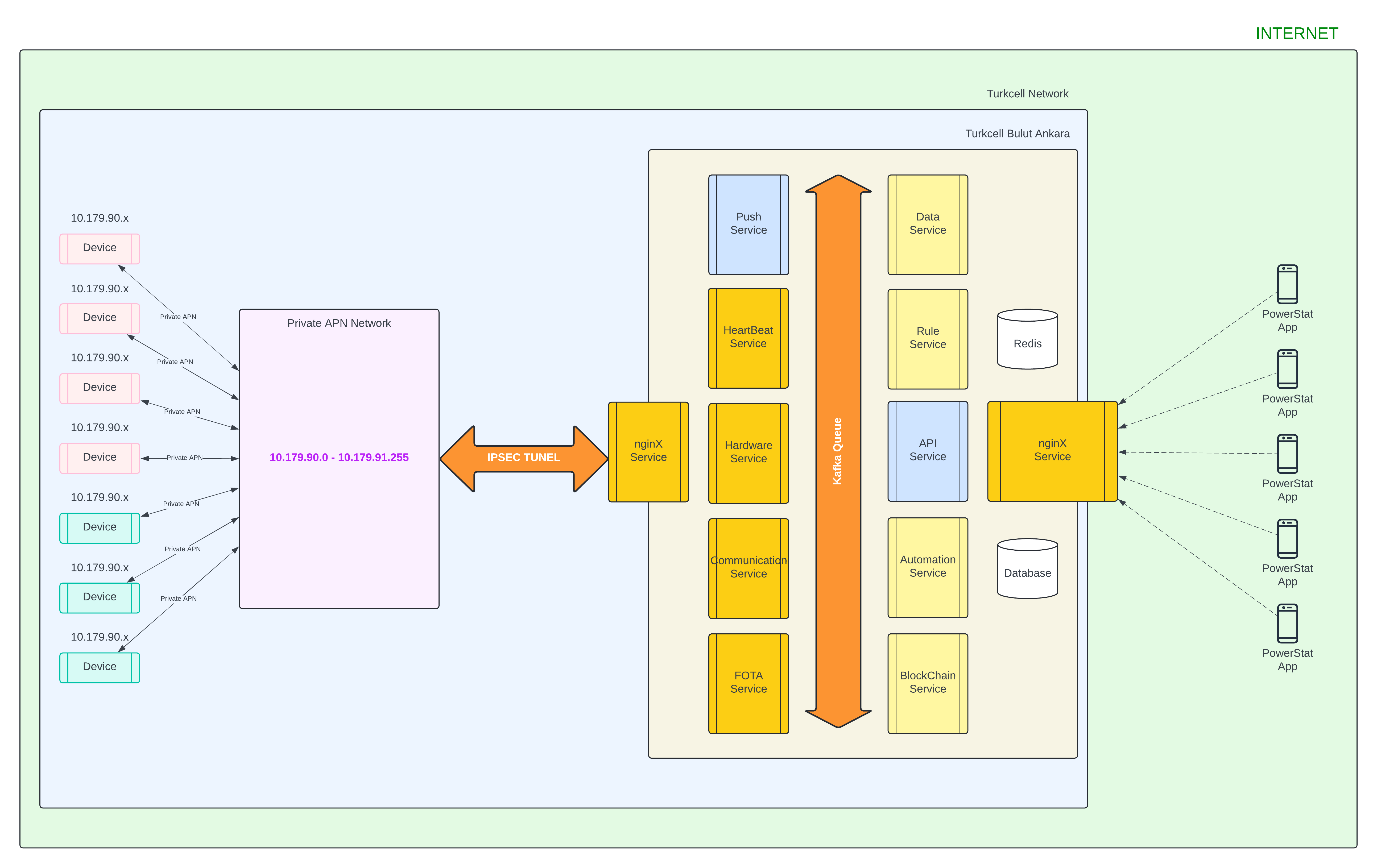
PowerStat has a general core; energy parameters, sensor data, status data, and all measured telemetry can be calibrated per device as needed. In other words, each endpoint may have its own calibration data. In addition, rules can be defined based on global or device-specific data and device customizations can be performed.
Mobile Application
The mobile application is PowerStat’s face of “remote management and notification” in the field. The design approach is minimalist and clear to help different user profiles in the field—operator/electrician/manager—make decisions quickly.
On the app side, a user can manage multiple sites and multiple PowerStat devices under the same account; they can quickly switch between devices and track current status. In critical events such as limit violations, power quality issues, pressure anomalies, or failure scenarios, instant notifications are received via the app, informing the user without delay. Additionally, seasonal and periodic reports allow tracking of irrigation durations, operating trends, and field performance; these reports provide a fundamental reference both for managing operations and for retrospective evaluation.
PowerStat’s mobile app does not limit field management to “monitoring”; it has a structure that can expand to meet practical needs on the operations side as well. The user can track expenses and estimated costs related to irrigation, record notes about the site within the app, and, when necessary, add sub-users (for example, family members, employees, or the electrician) to enable role-based authorization. In this way, the same site can be managed by people with different levels of authority.
One of the most important advantages of the app is that design and product initiative are entirely within the team. Since the app layer, like hardware and backend, is not outsourced, screen flows, report formats, and user experience can be quickly updated and shaped according to field feedback. Thus, the mobile app continues to develop as a living and continuously improved part of the PowerStat ecosystem.
Admin/Operations Panel
The management panel is designed for the PowerStat team and authorized operations network to manage the field at scale. Operational data such as device inventory, sites, users, installation status, alarm history, and service processes are managed through this panel. As the field operations network grows, this layer meets the need for “centralized control,” making the behavior of devices in the field observable from a single place.
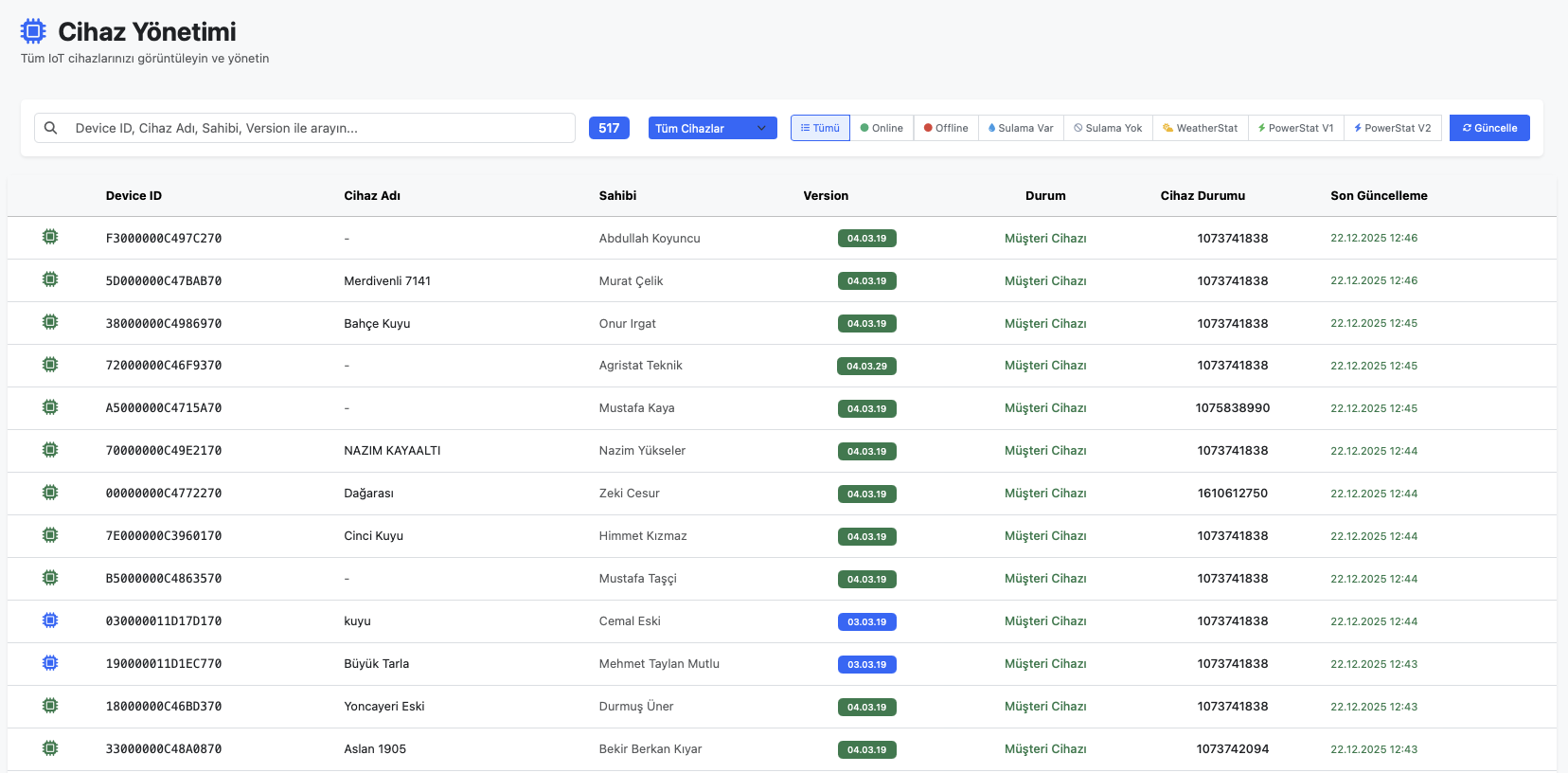
The panel also serves as a backbone for generating reporting outputs and standardizing customer-based tracking processes. Thus, field operations are transformed from being person-dependent into defined processes.
Data Model and Reporting Flow
In PowerStat, data flow is based on storing field measurements without loss in raw form and then transforming them into a reportable format. Energy measurements, pressure measurements, and event records have different characteristics; therefore, the data model takes these differences into account. On the reporting side, the goal is not merely to show “graphs” to the user; it is to produce decision-support outputs such as seasonal irrigation time, cost trends, failure recurrences, and performance deviations.
This structure makes it possible to interpret the same data according to different needs for farmers, electricians, and enterprises alike.
Security and Operational Principles
In PowerStat’s architecture, security is not a feature added later; it is a fundamental design criterion. Device authentication, data integrity, authorization model, and the approach supporting immutability of records determine system reliability. Likewise, on the operations side, logging, monitoring, error capture, and field intervention processes are mandatory for a scalable structure.
The security topics in this section are kept at a high level; encryption methods, key management, device identification, and access policies will be detailed on subsequent technical pages.