B101BA-PCIe
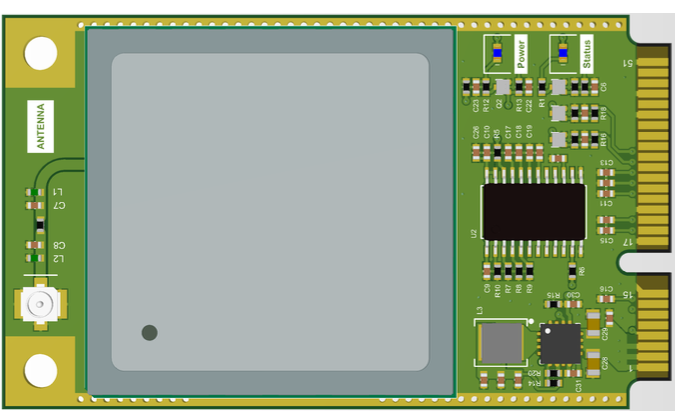
B101BA-PCIe is a 4G/LTE communication module designed in the qSlot structure for use in all kinds of IoT projects. The board houses the Telit LE910C1 modem, aiming to add cellular connectivity to field devices with a "plug-and-play" approach, simplifying installation and service processes.
PCIe Form Factor
This module adopts the physical PCIe card/connector form; however, it does not use the PCIe electrical protocol layer. Here, the term "PCIe" describes a mechanical standard. On the communication side, UART is considered the main bus according to system needs; USB is not implemented as a production connector on this board and is left only as test points for debugging purposes.
For more information about the qSlot structure, visit the qSlot page.
What It Is Not
B101BA‑PCIe should not be considered a "PCIe modem card". This board does not communicate over PCIe lanes like an NVMe/Network card inserted into a PCIe slot. This is intentional: while preserving a robust mechanical carrier/connector standard in field IoT devices, the goal is to keep the data bus simpler and more manageable (like UART).
What It Solves
In the field, GSM/LTE integration becomes challenging not only due to connecting the modem, but also because of power, level shifting, SIM/antenna details, and serviceability. B101BA‑PCIe consolidates modem integration on the module, simplifying the main board design; it also allows reusing the same module across different products on the project side. This shortens prototyping time and enables progressing in mass production with a "known" communication block.
Typical Use Cases
The target of this module is not to lock onto a single sector; the same basic block is offered for all cellular connectivity needs such as Agriculture IoT, industrial monitoring, meter/energy tracking, remote control, field sensor networks, and more. By moving the modem to a separate module from the main board, it provides significant convenience in projects that want to keep the "communication layer" stable across main board revisions.
Integration Logic
When integrating B101BA‑PCIe to the host side, the basic logic is as follows: first, the modem power is enabled in a controlled manner, then the I/O side is enabled, then the modem power-on procedure is applied, and finally communication is established over UART. This sequence reduces two common field problems: unintended powering of the modem (back‑power) and ambiguous states at startup.
The USB line is not intended as a production connector; it should be considered accessible via test points for debugging when needed.
All design and manufacturing resources can be accessed via the Github B101BA link.
Bu kütüphane, gerçek sahada kullanılan projelerden gelen ihtiyaçlara göre sürekli gelişen bir açık kaynak projedir. Kullanıcı geri bildirimleri, yeni fonksiyonların eklenmesi ve mevcut yapının iyileştirilmesi açısından kritik öneme sahiptir.
Bu kütüphaneyi hem kişisel hem de ticari projelerinde özgürce kullanabilirsin. Herhangi bir lisans kısıtı uygulanmamaktadır; amacım, bu kütüphanenin mümkün olduğunca fazla gerçek dünya projesinde yer almasıdır. Özel bir entegrasyon ihtiyacın, ticari bir planın veya teknik bir sorunun varsa bana e‑posta üzerinden her zaman ulaşabilirsin: akkoyun@me.com Geri bildirimlerini veya kullanım senaryolarını paylaşman, projeyi geliştirmem açısından büyük katkı sağlar.